
What a Technician Usually Finds After a Windstorm
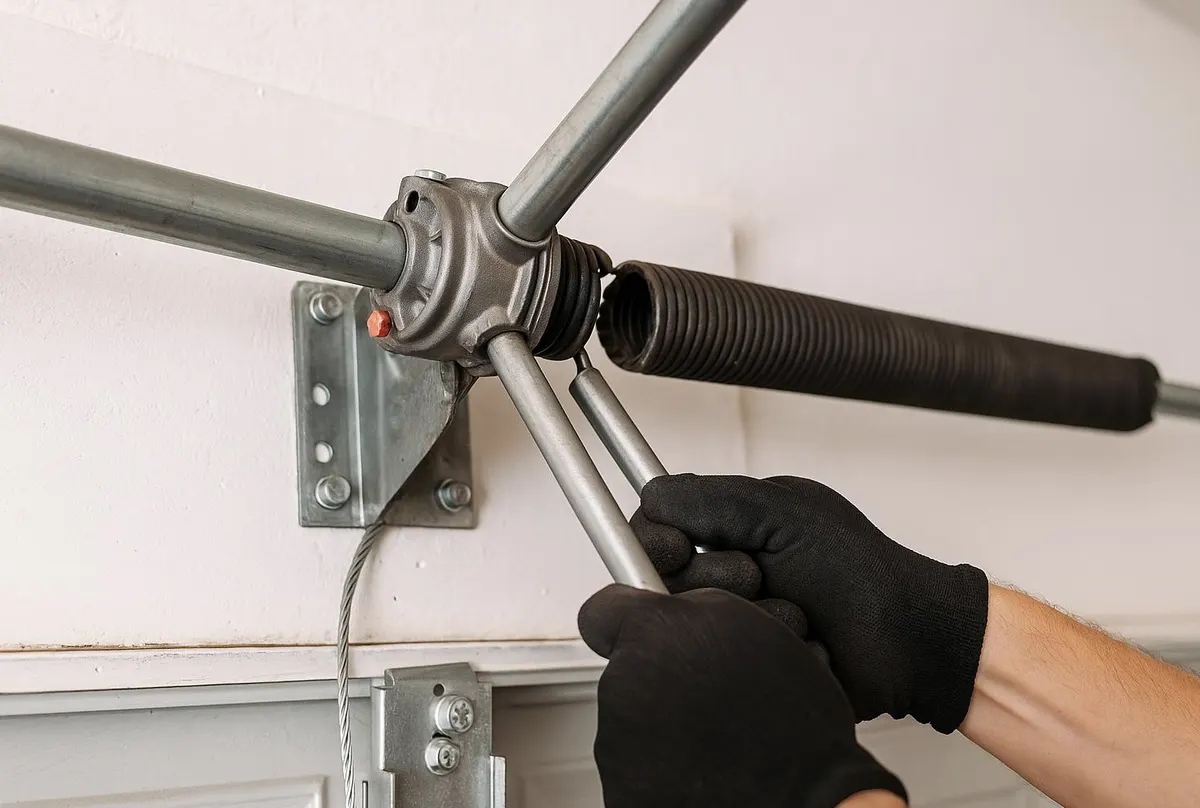
A typical call this time of year starts the same way: a homeowner heard a loud bang during a storm, and now the garage door won't open, or it opens but looks slightly bowed in the middle. On inspection, it's often one of a few things — a track knocked out of alignment when wind pushed the door off its rollers, a panel dented or cracked from debris, or torsion springs that finally gave out under the extra strain of the door straining against gusts. Sometimes the door itself is fine, but the opener's drive gear stripped trying to force a door that was already fighting wind pressure. None of this is dramatic to look at from the street, but it usually means the door was never built or braced to handle sustained wind loads in the first place.
Why the Garage Door Is a Home's Weakest Wall
Every other exterior wall in a house is a solid, continuous structure. The garage door is a large moving panel held in place by tracks, rollers, and a spring system — not by framing. When high wind hits a home, it creates positive pressure pushing in on the windward side and negative pressure (suction) pulling out on the other sides and roof. A standard residential garage door, especially an older one, isn't engineered to resist that kind of force. If it fails — buckles inward or gets sucked outward — the wind suddenly has a large opening to pressurize the whole garage and sometimes the attic space above it. That's how a wind event turns into roof damage or structural trouble, not just a broken door.
This matters more in this part of Missouri than people think. Spring is the headline tornado season, but fall brings its own round of fast-moving storm systems with straight-line winds and sudden gusts, often with little warning compared to a slow-building spring supercell. A door that's been slowly loosening all summer in the humidity is exactly the kind of door that fails in an October or November wind event.
Checking Your Door Before the Next Storm Rolls Through
- Track alignment: Stand back and look at both vertical tracks. They should be perfectly parallel. Any outward lean or gap between the rollers and track means the door has less resistance to side-to-side wind pressure.
- Panel condition: Look for dents, hairline cracks, or soft spots, especially on steel doors with foam-filled panels. Damaged panels flex more under pressure and are more likely to buckle first.
- Hardware tightness: Hinges, roller brackets, and track bolts loosen over a season of use. A hand-check with a wrench on accessible bolts catches a lot of problems before wind finds them for you.
- Weatherstripping and bottom seal: Cracked or missing seals let wind-driven rain in now and let cold air and ice in later. It's a cheap fix that solves two seasonal problems at once.
- Opener strength and reserve: If the opener strains, reverses unexpectedly, or runs slower than it used to, it may not have the torque to hold the door steady against gusts, let alone lift it during a power flicker.
Reinforcing Against Wind Before Winter Sets In
For doors that are structurally sound but under-braced, a few concrete upgrades make a real difference:
- Horizontal retrofit struts bolted across the back of the panels add rigidity without replacing the whole door — a reasonable middle step for a door that's otherwise in good shape.
- Heavier-duty tracks and rollers reduce flex at the exact points where wind pressure concentrates.
- Upgraded springs sized for the door's actual weight keep the door seated correctly under load instead of sagging, which matters more once ice and cold stiffen hardware in a few months.
- A wind-rated replacement door is the strongest option if the current door is older or already showing fatigue, and it pairs well with planning for next spring's storm season rather than reacting mid-event.
None of this requires guessing at a national price range on a one-size-fits-all basis — a technician can look at the specific door, track condition, and opener and tell you which of these actually applies, rather than selling a full replacement when a strut kit and new rollers would do the job.
When to Call Raytown Garage Door
If a recent storm left the door misaligned, dented, or struggling to open and close, or if an inspection turns up loose track hardware and worn rollers, that's the time to call before the next system moves through. Raytown Garage Door handles both routine Garage Door Maintenance to catch these issues early and Emergency Garage Door Service for doors that have already failed during a storm and need to be secured the same day. We show up, explain exactly what's wind-related versus general wear, and fix it right the first time.
If storm season has you second-guessing your garage door, call Raytown Garage Door today and get it checked before the next front rolls through Raytown, MO.